[ad_1]
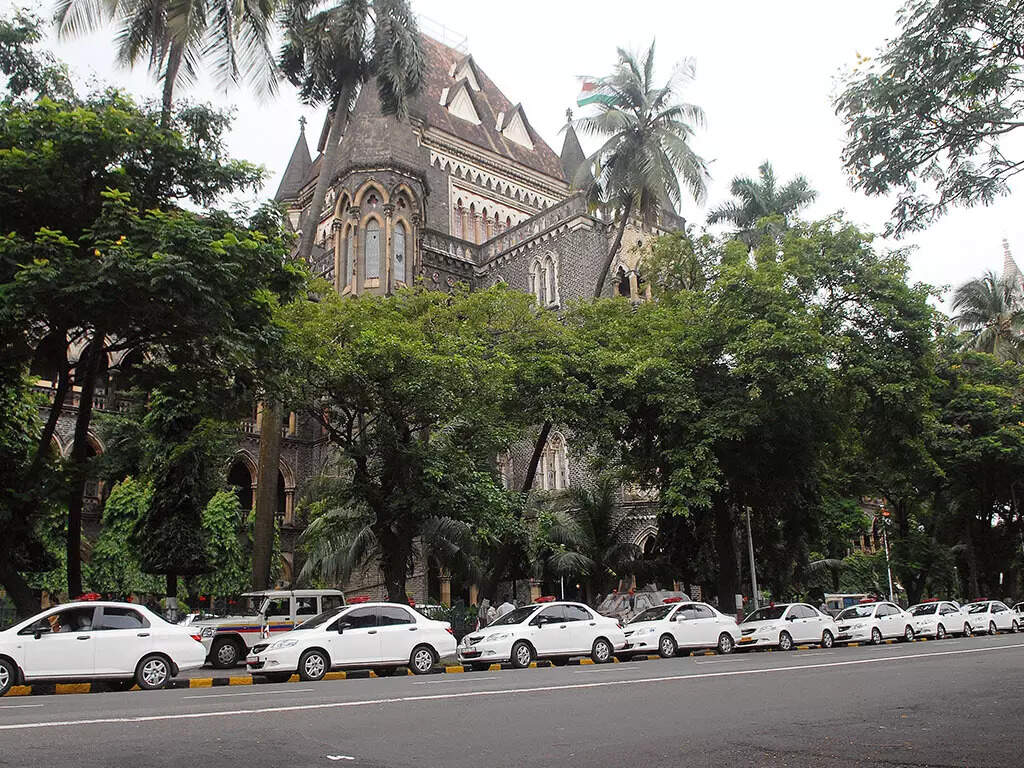
MUMBAI: A huge relief has come to a large number of real estate projects stuck for long as the state authority is deferring petitions for environment clearance (EC) citing September 2022. NGT count, Bombay High Court On Friday, the State Environment Impact Assessment Authority (sia) Expeditiously decide such requests on merits within eight weeks.
A bench of High Court’s Acting Chief Justice SV Gangapurwala and Justice Sandeep Marne on Friday said that the State Environment Impact Assessment Authority (SEIAA) “could not have stayed the decision of the proposals for grant of EC merely on the basis of its judgment and order dated September 13, 2022”. of National Green Tribunal (NGT)” which was in a special case and “will not govern every proposal submitted under SEIAA”. DCPR 2034,
The HC directed the SEIAA to consider and decide on each of the EC proposals by applying the provisions of DCPR 2034 or UDCPR, as the case may be and “relating to permission to provide recreational open space at podium level in a particular project” All questions on merits are waived. Open to SEIAA to decide on its own merits.”
The HC’s 18-page judgment authored by Justice Marne concluded that the NAREDCO petition is partially allowed saying, “Having regard to the fact that the proposals submitted by the petitioner No. 1 Association are pending for long , SEIAA shall proceed to take a final decision thereon at the earliest. As far as possible within a period of eight weeks from today.”
The HC judgment was last year in a petition filed by himself regulator Citing a letter dated September 23, 2022, of the NGT registrar following an order in a matter relating to Kalpataru builders, the body for real estate – NAREDCO West Foundation – “inaction” of state authorities and deferring of various pending petitions by SEIAA Challenging the decision of From that judgement, the NGT has held that recreation grounds should be provided at ground level, which should not only be open to the sky, but should also be capable of planting trees. The NGT had also directed that a project failing to provide recreational grounds (RG) at ground level cannot be allowed to proceed.
Foundation’s senior counsel Praveen Samdan said the NGT order was only for projects governed by the Development Control Regulations of 1991 and not applicable to projects governed by the Development Control and Promotion Regulations 2034 (DCPR) and the Unified Development Control and Promotion Regulation (UDCPR) it happens. ,
Samdani said the NGT order cannot be construed as a general direction to the SEIAA that no proposal for an EC shall be approved unless recreational grounds are provided at the ground level.
He argued that instead of taking a final decision, SEIAA kept on postponing all the proposals.
For the state, its counsel Milind More said that the SEIAA “feels bound by the directions of the NGT which appears in Rem. He would submit that there is no clarity on the issue whether the NGT order is governed only by the DCR 1991″. projects or whether the same would apply to projects governed by DCPR 2034/UDCPR and therefore, SEIAA has rightly deferred the various proposals till clarity is obtained.”
Samdani said: “DCR 1991 made it mandatory to provide recreational space at ground level, while DCPR 2034 and UDCPR allow provision of some portion of recreational open spaces, especially on the podium area.”
An intervention petition filed by Anil Tharthare opposed NAREDCO’s plea. “The objections raised by the intervenor regarding the petitioners seeking indirect stay of the judgment and order of the NGT are completely misconceived,” the HC said.
Centre’s counsel Amogh Singh argued against the maintainability of the plea citing alternative remedy in law against the NGT order. The High Court observed, “In so far as the objection regarding maintainability of the present writ petition in the light of availability of alternative remedy under the National Green Tribunal Act, 2016 is concerned, we have not gone into the merits of the issue Whether environment clearance can be granted for a particular project or not.What we have dealt with in the present judgment is about the legality of the action. SIEAA In postponing proposals instead of taking final decisions on them. Since the eligibility of a particular project proponent for grant of environmental clearance is neither an issue raised in the petition nor is it decided by us, the issue of availability of alternative remedy under the 2016 Act becomes redundant. We are merely issuing directions to the SIEAA to decide the proposals placed before it by applying and interpreting the provisions of the relevant DCPR 2034/UDCPR. Therefore, the objection on availability of alternative remedy is dismissed.”.
[ad_2]
Source link