[ad_1]
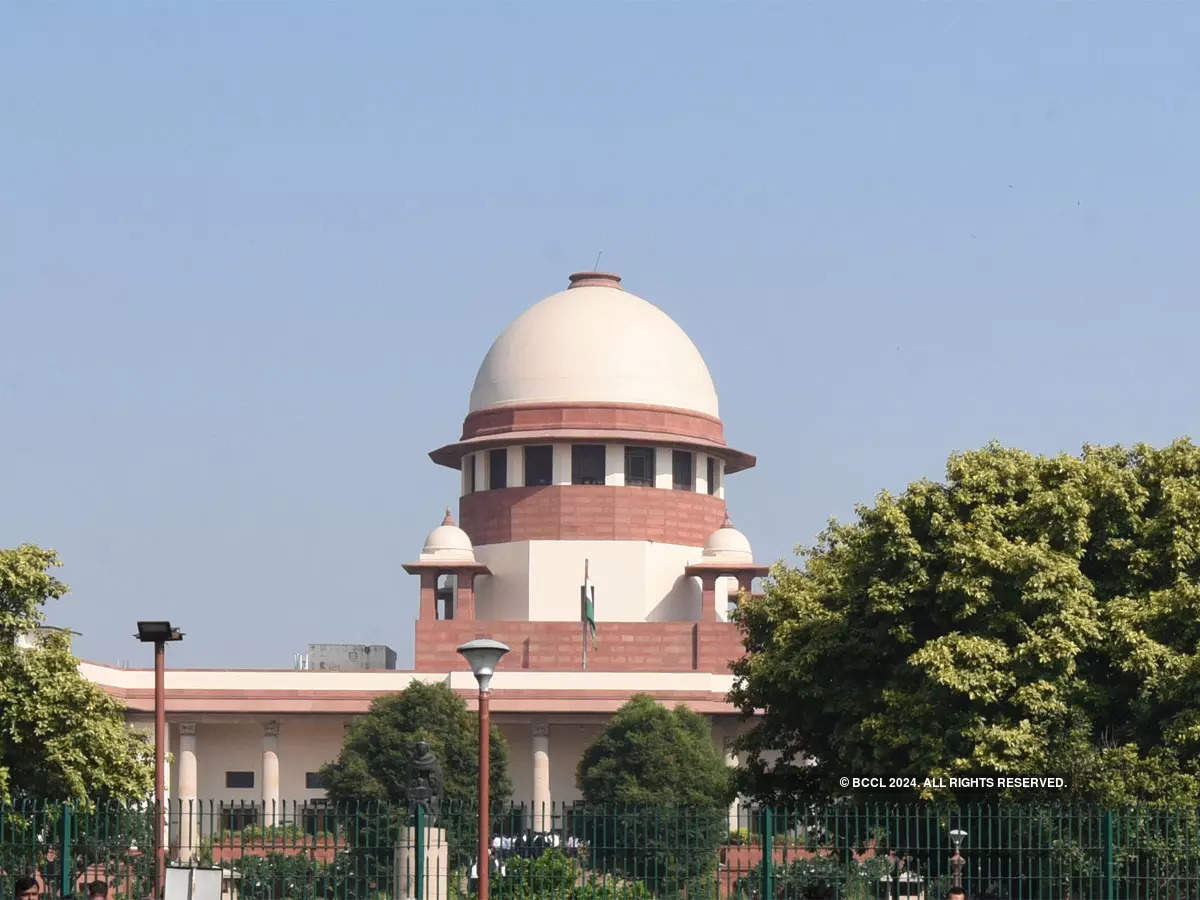
MumbaiThe Supreme Court on Monday upheld the Bombay High Court’s April 1, 2019 judgment setting aside three rules for deciding the ‘capital value’ of land where construction is set to begin under a new one. property tax Administration.
for in a jiffy BMCProperty owners and developers are seeing the decision of the Supreme Court bench of Chief Justice UU Lalit and Justice Bela Trivedi as a big relief.
The BMC’s new rules led to a much higher property tax for developers, who had challenged the constitutional validity of the new regime for computing property taxes. Property tax is one of the biggest and “important” revenue sources for the BMC, especially since the abolition of octroi.
The High Court had said, “There is no provision under the BMC Act to consider the development potential for determining the capital value of vacant land.” But in BMC’s victory, the HC had upheld the constitutional validity of the ‘capital value’ method of computing wealth tax.
The SC reiterated that “for the purpose of determining the capital value”, only the present physical characteristics and condition of the land and building can be considered and not the future prospects of the land”.
In 2009, the BMC changed the property tax regime and shifted the calculation mode to ‘capital value’ of land instead of ‘ratable value’ – a complex formula involving level-low standard rents dating back to 1940.
The Property Owners Association (POA) led the legal battle against the ‘capital value’ regime in 2013. Many others, including the Central Mumbai Developers Welfare Association (CMDWA) and bodies of trusts, hotels, institutions and other developers, joined in.
In 2019, the HC had held that the amendment was valid, but struck down three of its rules—20-22—invalid. Rule 20 states that the ‘capital value’ will depend on the buildable capacity of the land.
The BMC appealed to the Supreme Court saying that the rules provided for a cap on property tax, and hence they would not skyrocket as builders feared. The HC had also said that the new tax regime could be implemented only from March 2012 and not from 2010 as was being done by the BMC.
The PoA, CMDWA, other developers and interventionists had challenged part of the HC’s decision upholding the new regime.
On Monday, the Supreme Court said the appeals were dismissed and the matter was finally disposed of.
The Supreme Court heard attorney generals KK Venugopal and V Sreedharan for BMC, and prominent counsel including Shekhar Naphde, Milind Sathe, Neeraj Kishan Kaul, Darius Khambata, Chirag M Shroff, H Devarajan, who argued that the land where the existing old buildings were dilapidated. -Various were to be taxed only as ‘vacant land’ and not based on the proposed mall or hotel.
[ad_2]
Source link