[ad_1]
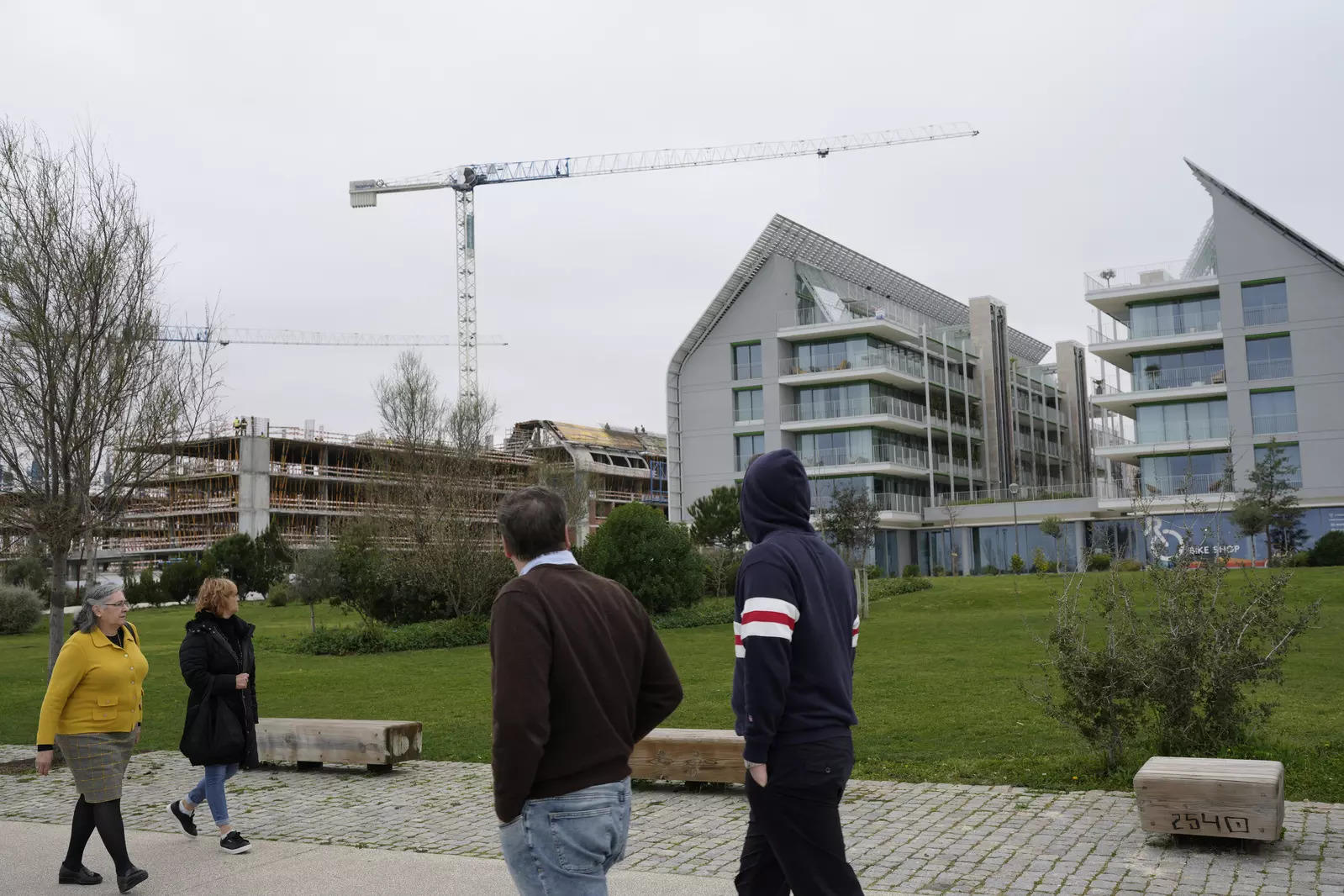
Lisbon: As the number of people continues to grow PortugalGeorgina Simoes no longer earns enough money to buy a place to live.
The 57-year-old nursing home carer earns less than 800 euros ($845) a month, as does almost a quarter of the country’s workforce. For the past decade, she’s gotten by because she’s been paying just 300 euros a month for her one-bedroom apartment in an exclusive Lisbon neighborhood.
Now, with rents rising in the capital, her landlord is evicting her. She says she won’t move because finding another place nearer to work would be too expensive.
“You live in this state of anxiety,” she says in her apartment with a partial view of the Tagus River. “Every day you wake up thinking, ‘Do I stay here or do I have to go?’
Simãos and many others, including a growing middle class, have been forced out of Portugal’s property market, hit by factors including rising rents, rising house prices and rising mortgage rates, a growing influx of foreign investors and tourists seeking short-term rentals. have been Deepening fears about the health of financial institutions in recent days, as well as the prospect of high inflation continuing, have added to further uncertainty.
Portugal’s centre-left socialist government last month unveiled a package of measures to address the problem, and some of them are set to be approved by the cabinet on Thursday.
Between 2020 and 2021, house prices in Portugal increased by 157%. From 2015 to 2021, rents increased by 112%, according to European Unionstatistics agency of eurostat,
But the rising cost of real estate tells only part of the story.
Portugal is one of the poorest countries in Western Europe and has long held the back of a low-wage economy. More than half of Portuguese workers earned less than 1,000 euros ($1,054) a month last year, according to labor ministry figures.
In the European Union, recent increases in inflation, especially rising food and energy prices, and the lingering economic and labor consequences of the COVID-19 pandemic have exacerbated the housing dilemma in the 27-nation bloc.
The Block says that more than 82 million households in the EU have difficulty paying their rent, 17% live in overcrowded housing and more than 10% spend more than 40% of their income on rent.
Most affected by unequal access to decent, affordable housing are young people, families with children, the elderly, the disabled and migrants.
In Portugal, the problem has been exacerbated by tourism, which has returned to strong pre-pandemic growth, as well as an influx of foreign investors, who found Lisbon’s relatively low real estate prices and raising prices unaffordable for locals. forcing them out. of their neighborhood.
After attracting a record 25 million foreign tourists in 2019, Portugal attracted 15.3 million last year – a 158% increase after the pandemic restrictions hit the previous year. Analysts expect 33% growth this year.
For some, the long-awaited national breakthrough with overseas holidays is a matter of being careful what you wish for.
Rosa Santos, a 59-year-old born and raised overlooking the port city near Lisbon’s 14th-century St. George’s Castle, says most of the homes in her neighborhood are short-term vacation rentals, largely for foreign tourists. is for It is common to see and hear visitors dragging suitcases over the stones.
Gone are the rich traditions of the local people, says Santos, and there isn’t even a bakery or grocery store.
“It’s not a neighborhood anymore,” she said. “It’s not a city, it’s an amusement park.”
Activists are fighting against a trend that is depriving the capital of its charm. Santos is part of a growing movement calling for a referendum to stop short-term holiday rentals in Lisbon. They gather in downtown neighborhoods every weekend to collect signatures supporting their cause. They need at least 5,000 signatures to start the referendum process at City Hall.
On a recent rainy day, police helped municipal workers using backhoes to demolish several illegal temporary housing without electricity or running water on the outskirts of Lisbon. Families forced by necessity to stay in them begged them to stay.
The shanties were just a few kilometers (miles) from a luxury condominium on the Lisbon coast, where a four-bedroom apartment sells for 2.4 million euros.
Not far away, in the low-income Camarate district close to the Lisbon airport, missionary worker José Manuel helps needy families, some of whom haven’t been able to pay for a room, let alone a home, and as a result They are being pushed out of town.
“We are already talking of a room in Camaret for 400 euros, a house for 600 or 700 euros,” he said. “Those on minimum wage can’t afford a home.”
Grassroots housing rights groups have sprung up and are helping those struggling to keep a roof over their heads. One of them, Habita, is pushing the authorities to stop encouraging premium developments by and for wealthy foreigners.
For Habita’s Rita Silva, the government should also implement stricter rent controls and “stop evictions if there are no suitable housing options.”
Prime Minister Antonio Costa says cities that lose their residents lose their “authenticity” and become “Disneyland” for tourists.
Among the measures his government hopes will improve the market:
– Forcing owners of vacant properties to rent them out, giving priority to renters under the age of 35, single-parent households or households whose income has dropped by more than 20%.
– The capping in new rental contracts increases by 2% from the previous contract.
– Ending the government’s “golden visa” program, which gives residence permits to wealthy foreign investors buying property in Portugal.
Stopping new licenses for short term holiday rentals through tourist accommodation platforms, except in rural areas.
– Conversion of commercial property to residential use.
The proposals have sparked controversy: some see them as over-the-top and path-breaking, others say they lack detail on how they would work. And some are angry.
Hugo Ferreira Santos of the Portuguese Association of Real Estate Developers and Investors said foreign investment has stalled as people wait to see how the golden visas shape up.
what i was hearing international The investor is that Portugal is not a reliable country,” he said. “It is a country that changes the rules of the game midway and a country where foreign investment is not welcome.”
Small investors investing in apartments for short-term vacation rentals are also worried.
Eduardo Miranda, head of a Portuguese union representing their interests, said, “There are people who gave up their lives, set up their businesses, created jobs, created workers and suddenly one day they were put down without any prospects.” Went.”
Some measures will require the approval of Parliament, and others may be referred to the Constitutional Court for review.
[ad_2]
Source link