[ad_1]
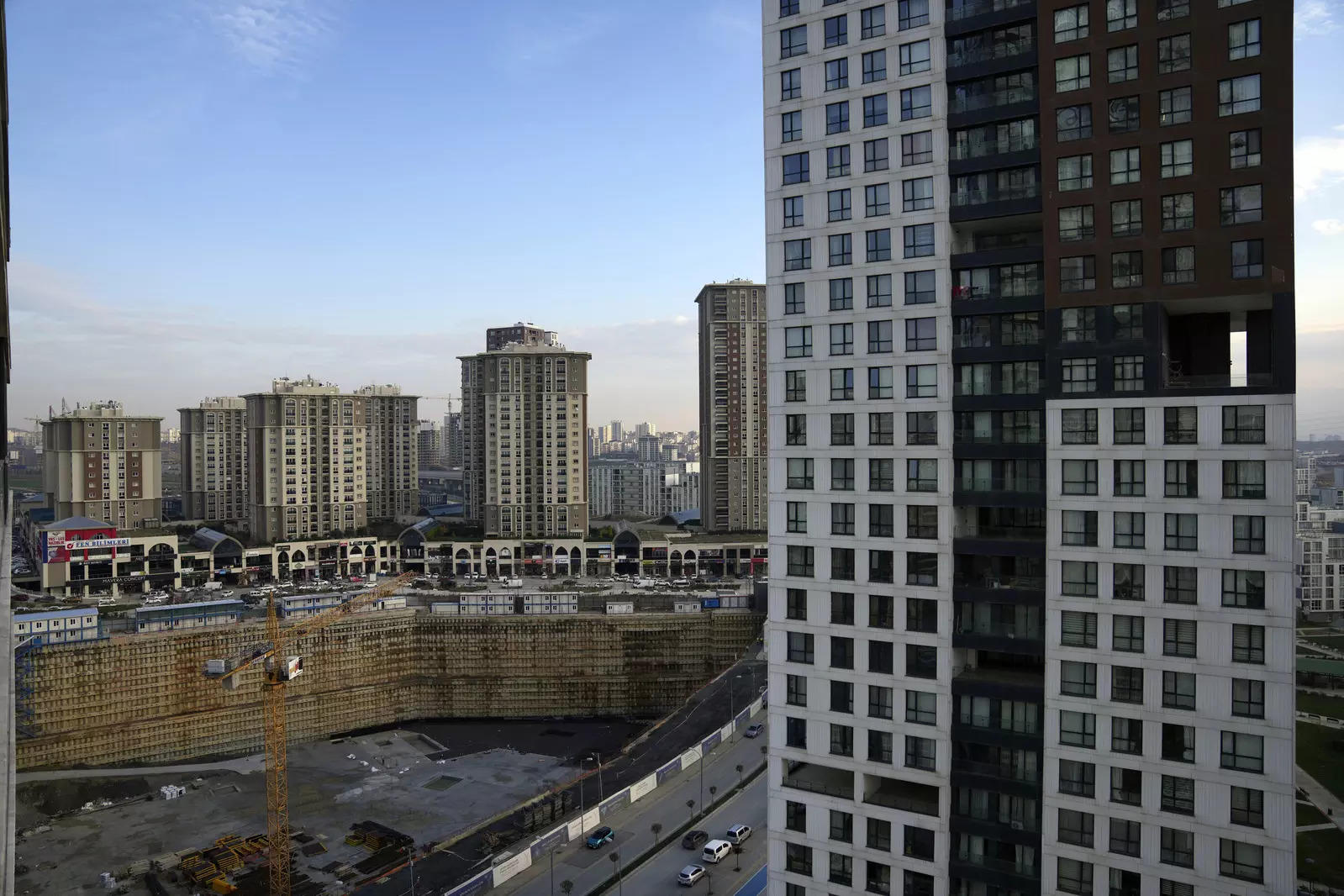
Istanbul: Hatice Erdal has been given a week to vacate her rental house which is about to be demolished. Both the cleaner and her husband earn minimum wage, and even with their combined salaries, they can’t find anything within their budget in Istanbul’s overpriced housing market.
“I found a house, it was 12,000 lira ($645), the other one was 10,000 lira ($537). I can’t pay that. … What will I eat and drink?” Erdal said about the monthly rent. “If the weather was hot, I would live in a tent, but I can’t even do that. I don’t know what I would do.”
The economic turmoil induced by the astonishing inflation of about 85% has subsided turkey In one of its worst asset crises ever. Skyrocketing prices have made rent difficult for many, especially millions earning the monthly minimum wage of 5,500 lira ($295), who struggle to cover costs for food, energy and other expenses. Finding affordable housing to rent or buy has become an uphill battle.
While rising construction costs and inflation have pushed up housing prices globally, Turkey’s property crisis has been exacerbated by President Recep Tayyip Erdogan’s unorthodox policy of lowering interest rates despite high inflation – contrary to conventional economic thinking . This has prompted many people to invest in property to protect their savings against rising inflation. Prices have skyrocketed with housing in short supply.
People have opted to buy real estate instead of keeping savings in low-interest bank accounts. Turkey’s central bank has slashed interest rates to 9% despite inflation, which independent economists say reached 170.7% in November. Erdogan believes higher borrowing costs lead to higher prices, while most economists say raising rates is the traditional antidote to inflation.
Foreign buyers have also flooded the Turkish property market, lured by the Turkish lira, which has lost almost 28% of its value against the US dollar since the start of the year – with 2021 set to bat even worse. Feather. They also have the chance to obtain Turkish citizenship through real estate purchase.
According to the State Statistical Institute, home sales to foreigners between January and November increased by 20.4% compared to the same period last year. Most of the buyers were Russian citizens, followed by Iranians, Iraqis and Ukrainians.
The crisis pushed the Turkish housing price index up nearly 190% in September compared to the previous year, according to central bank data. The annual increase in Istanbul, Turkey’s most populous city, was a staggering 212%.
Inflation and rising housing prices have also led to an unprecedented increase in rents.
Real estate agent Kenan Altynay said, “This is the first time we are experiencing such an increase in prices.” “Every year, we see a difference of 20% or 25%, but this year it has reached 200%.”
To keep prices in check, the government has put a 25% cap on rent increases, but some landlords follow this rule because they try to keep their earnings on par with inflation.
Property lawyer Idil Bora says courts are flooded with eviction suits because of rent hike disputes.
“The civil courts of peace, which are tasked with dealing with these cases, are so overburdened that hearing dates are set five or 10 months later,” she said.
This has left people like Duygu Ataman Gunay unsure of what will happen next. Gunay, an architect, is concerned that when his rent is up for review next month, his landlord will increase his rent beyond what he can afford.
“I don’t know what awaits us in January,” she said. “Either our rent will triple or (the landlord) will put the house up for sale.”
She said the cost of rent, food and clothing has doubled or tripled and white-collar workers like her have not received pay hikes that keep pace with rising prices.
Gunay said, “Our purchasing power has completely dropped.”
[ad_2]
Source link