[ad_1]
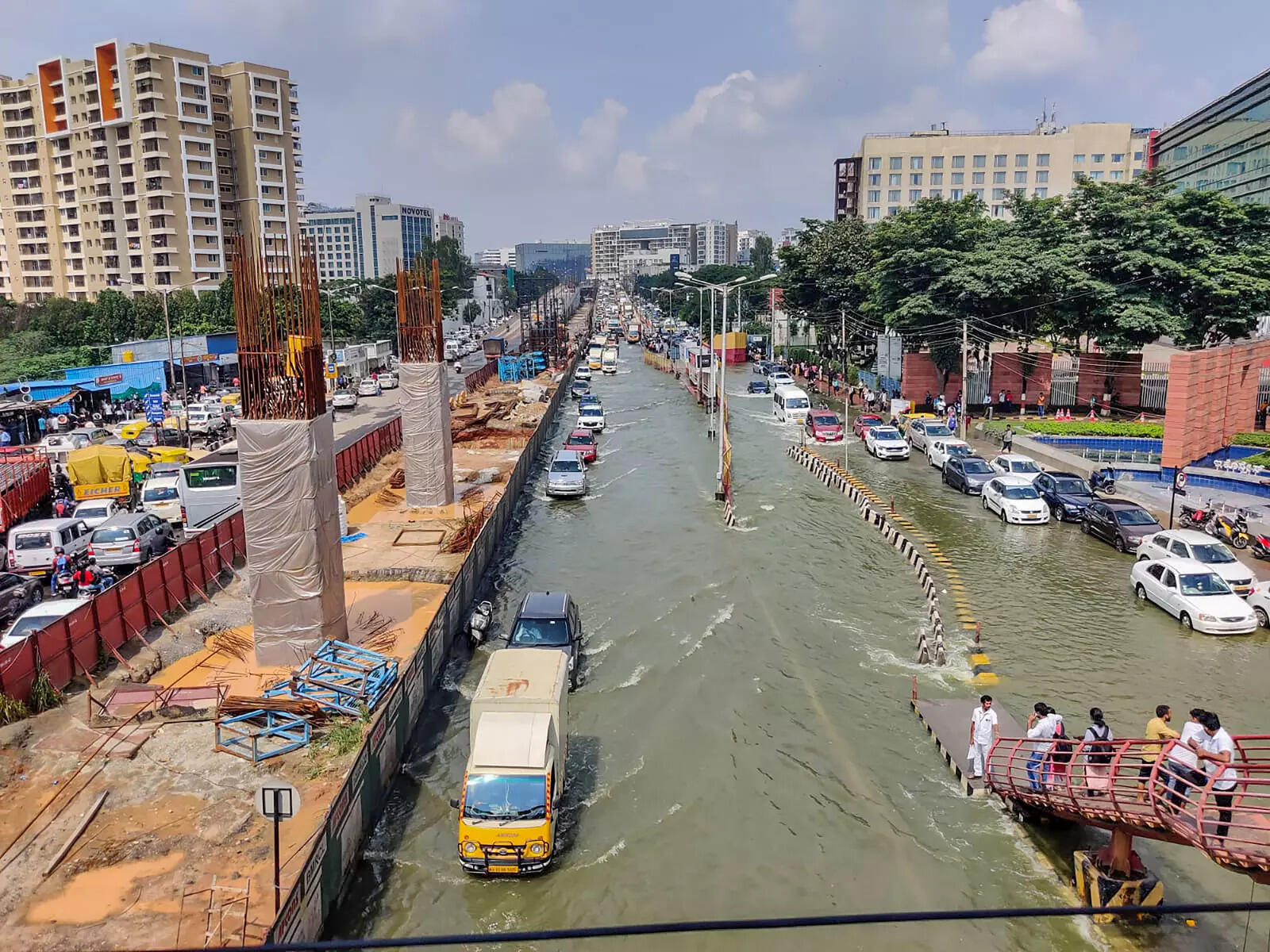
BangaloreBengaluru: The Bengaluru civic agency has identified several illegal structures that are built on storm water drains, causing severe flooding in some parts of the city, especially the Information Technology (IT) corridors and main roads, recently.
The anti-encroachment campaign echoed in the state assembly as well.
Karnataka Chief Minister speaking in the House on Wednesday Basavaraj Bommai He reiterated that there would be no discrimination in the campaign to free the illegal occupants of drains.
According to an Assistant Executive Engineer (Stormwater Drain-Mahadevapura Zone) of BBMP, Bagmane TechparkWipro, and former heaven Various survey numbers of Mahadevapura zone have encroached upon the drains, which are the worst victims of the rain.
Real estate firm RBD was another encroacher who, along with ‘Ecospace’, had taken over drains at Junnasandra, Halanayakanahalli and Doddakannahalli, according to the list. Bellandur and the Gopalan group in Hoodi and Bellandur, said AEE.
Bellandur has the largest lake in the city, which has shrunk due to massive encroachment.
Other alleged encroachers include Adarsh, Columbia Asia Hospital, New Horizon College, Adarsh Retreat, Epsilon, Divyashree, Prestige, Salarpuria and Nalapad.
BBMP chief commissioner Tushar Giri Nath said the civic body will first give notice to the owners of buildings who have built structures on the drains and after their response, it will take appropriate action.
Chief Minister Bommai, speaking in the Assembly, said that he has given clear instructions to the Chief Commissioner of BBMP and other officers not to succumb to any pressure.
Two weeks before the torrential rains in Bengaluru, the Assistant Executive Engineer of the Stormwater Drain Division, in his letter dated August 17, warned his superiors about encroachments by “powerful people”.
The AEE had clearly indicated possible floods and its impact on the IT corridor. The list has been prepared on the verbal instructions of the Zonal Commissioner of Mahadevapura.
According to government officials, there were 1,953 encroachments of storm water drainage, of which over 1,300 have been removed.
He said the BBMP, however, could not retrieve drains in over 630 encroachment sites as residential buildings, apartments, firms, schools and hospitals have come up there.
Most of them are located in Mahadevapura and Bommanahalli area while survey of encroachment in illegal layout in Yelahanka is underway.
According to him, Yelahanka zone has the highest number of illegal layouts. Last year, Yelahanka was flooded after which some major encroachments were removed.
BBMP officials said the total length of the storm water drainage network in the city is 860 km. However, in most cases, the width of major drains is reduced from 60 feet to a mere 10 or 20 feet due to construction of illegal structures, leading to flooding, he said.
An official of the BBMP lake division said, “If the width is not brought back to its old size, this problem will continue.
The civic body continued its anti-encroachment drive on Wednesday for the third day after the floods, forcing the government to take strict action in clearing the buildings blocking storm drains.
The BBMP said it carried out anti-encroachment operations at Shantiniketan Layout, Papiya Reddy Layout and Chalaghatta in Mahadevapura area and Satellite Town in Yelahanka.
Chief Minister Bommai said, “We have started this encroachment drive. We will not discriminate against anyone. Karnataka Lokayukta has directed us to follow due process of law, which we will do.”
However, he said that demolishing the houses is not an ‘achievement’. He insisted on finding a solution to the problem instead of blaming others.
The chief minister’s reaction came after JD(S) leader HD Kumaraswamy alleged that the city faced the consequences of “killing lakes” for building bus stands and other structures on them.
The former chief minister blamed the Bangalore Development Authority (BDA) for the disappearance and flooding of several lakes in the city.
He took a dig at Congress’s march for a balancing reservoir at Mekedatu in Karnataka, saying if the lakes were saved, there would have been no need for Cauvery water in the city.
“Once upon a time, there were more than 1,000 lakes in the city. Had we saved all of them, our water requirement would have been met, but we didn’t. There was no need for the Mekedatu padayatra either,” Kumaraswamy said. he said.
[ad_2]
Source link