[ad_1]
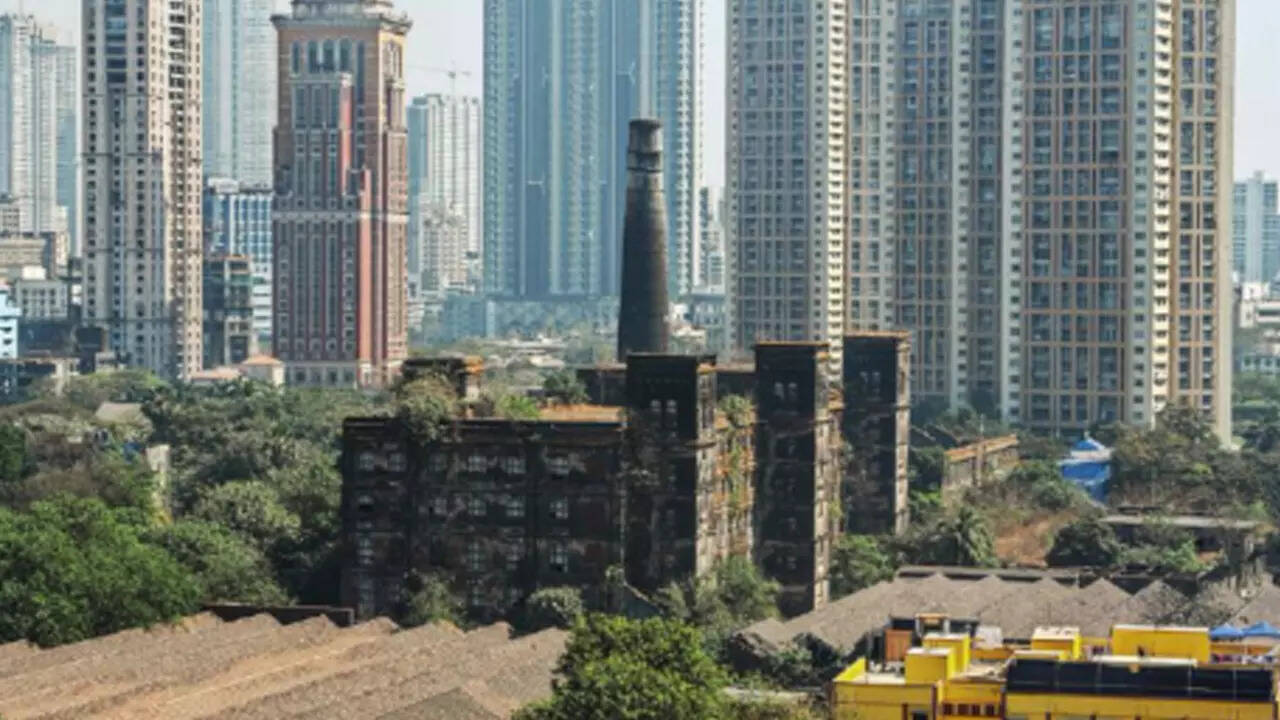
MumbaiCentral Mumbai to see 1.8 million sq ft of new construction due to the redevelopment of nine defunct 11 chawls. National Textile Corporation (NTC) Mill. This, planners say, is a real estate influx that could put more pressure on already overloaded public infrastructure and leave residents gasping for open spaces. Or it could be an opportunity to provide a better quality of life to residents and office goers in central Mumbai.
Of the proposed 18 lakh sq ft of construction, about 6 lakh sq ft will be for rehabilitating the 2,062 tenants currently living in NTC Chawls, free of cost. The builder who wins the bid for redevelopment of the chawl will be entitled to get a whopping 12 lakh sq ft in the free sale component. According to property experts, the value of the free sale portion could exceed Rs 5,000 crore.
Last month, the Center had asked the state government to help redevelop chawls on nine NTC mill lands in the city spread over 14 acres. Union Textiles Minister Piyush Goyal had said that NTC does not have the expertise to redevelop old and dilapidated tracks. However, he stressed that the redevelopment was not a precursor to commercial redevelopment of NTC land.
global property firm Cushman & Wakefield Consultant has been appointed for the redevelopment project. According to the minister, the advisory will help define the role of state and central governments to facilitate redevelopment. The project report is expected to come by March.
“All the 2,062 residential and commercial residents of NTC Chawl need to be rehabilitated by the NTC under the provisions of the city’s new Development Control Promotion Regulation,” said a C&W official. These chawls are in different pockets of nine NTC mill lands in central Mumbai and Mahim. NTC controlled 18 mills in Mumbai, all of which have ceased operations.
Pankaj Kapur, founder and MD of real estate rating and research firm Liaises Foras, said new construction on NTC land would put further pressure on the property market. “There are 278 ongoing projects in the catchment area of NTC Mill land in central Mumbai, with 18,728 flats or 36 million sq ft of unsold stock with 66 months of inventory. The redevelopment of NTC Chawl will create a free sale component of 12 million sq ft of supply and is negligible compared to the existing 36 million sq ft of unsold space. However, the impact will be much greater when the rest of these mills come up for development,” he warned.
“Due to the previous mill land development, which affected the wider supply in the micro-market, apartment prices in the micro-market have remained stable, showing an annual increase (-0.3%) over the past eight years. Prices in this micro-market have The future growth prospects are also slim,” he added.
redevelopment say urban experts NTC Mills It provides an opportunity to rectify what Charles Correa called “the tragedy of Tulsi Pipe Road” – the chaotic and ad hoc redevelopment of hundreds of acres of mill land in Lower Parel into luxury housing and corporate offices without additional civic infrastructure or social amenities.
This tragedy is visible every day in the area: endless traffic, hardly any greenery or parks or public spaces, no proper footpaths for commuters who get down from stations, and limited east-west links.
“At that point there was an opportunity to work with large tracts of land that could give the city integrated open space and mixed-use development,” said Anuradha Parmar, executive director of the Urban Design Research Institute. Instead, “we have bubbles of silent development that have worked hard to cut themselves off from their immediate surroundings.”
The analysis done for F/South Ward for Development Plan 2034 shows that the area is short of 31 hectares of land for education and 69 hectares of land for open space requirements. There is also a shortage of land for cemeteries and markets.
VK Phatak, former chief planner of the regional authority, said Kamala Mills is an example of how things have gone wrong. The 14 hectare plot was redeveloped without new provisions for pedestrians or cars, putting tremendous pressure on the existing network.
He said that at least they should have been asked to build a road on their land and give it for public use. “When large areas are redeveloped as private precincts, traffic and walkability are compromised.”
The authorities now have a chance to bring down the chaos in central Mumbai. Phatak said the government could prepare a local area plan that accounts for roads, pedestrian facilities and the increase in open spaces needed to accommodate the flow of more people and vehicles.
He said that making a local area plan is legal. “They change the Development Control (DC) rules anyway; They can use the same provision for amendment to make a local area development plan,” he said. Such a plan can provide road network, open spaces and amenities and also provide building design guidelines, he said. .
Parmar said that a large-scale study is needed to understand the needs of the local area. He said that the process should be transparent and democratic. “Policy makers need to look at this land not only in terms of housing numbers and FSI calculations, but also as opportunities for other types of uses and amenities.”
Property experts suggest that there are also commercial reasons to ensure that the area is well-planned. Any spurt of development in the area is likely to increase the supply of luxury housing and keep prices under check, says Prashant Thakur, head of research at Anarock. But “someone who buys a Rs 10-15 crore flat is not only looking at the building, they are looking for a good neighbourhood,” he says, adding that this is one of the reasons why Dubai real estate is now in South Mumbai. is competitive with. “The neighborhood is better.”
[ad_2]
Source link